Eggs make a cracking comeback on babies’ menus
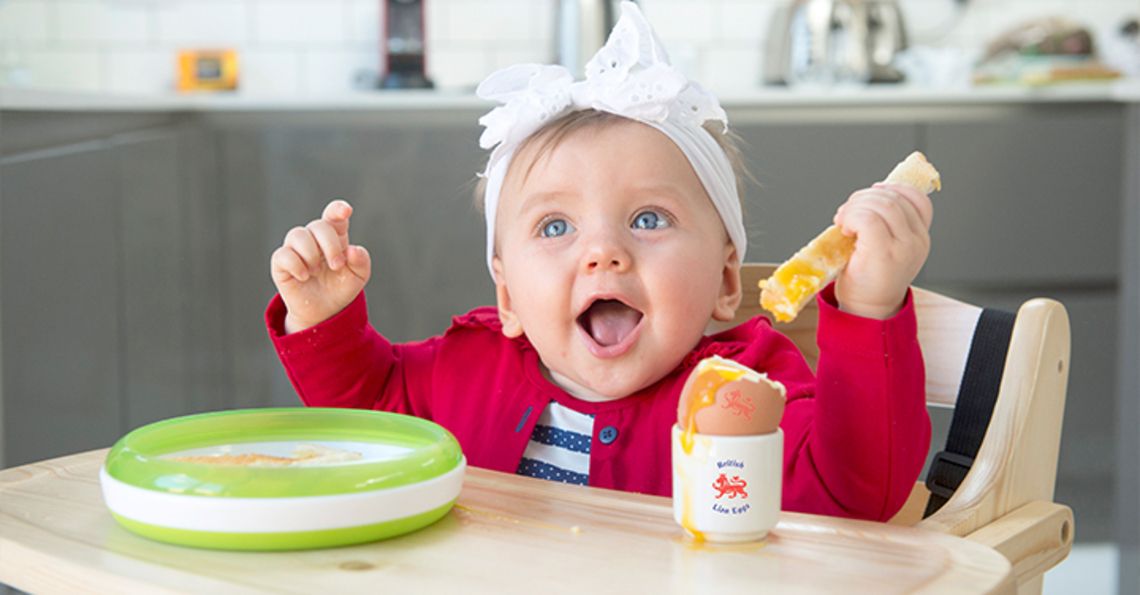
New government survey finds the proportion of babies eating eggs weekly has more than doubled since 2010
Babies are tucking into an egg more than twice as often compared with 14 years ago, according to the latest Infant Feeding Survey published by the UK’s Office for Health Improvement and Disparities (OHID)[1].
The last survey in 2010 – prior to the Food Standards Agency’s announcement that British Lion eggs were safe to eat runny or raw from 6 months of age[2] – found that just a quarter of parents gave eggs to their babies at least once a week.
In the new survey, this figure has risen to 66% - more than a 2-fold increase – and nearly one in ten babies enjoys an egg dish most days of the week.
Dietitian and mum of two, Dr Carrie Ruxton, says: “Parents were traditionally nervous about including eggs in babies’ weaning diets, not just because of food safety and runny yolks but because of fears about egg allergies.
“But since the government’s change of advice, it’s back to runny boiled eggs with toast soldiers, lightly cooked omelettes and cheesy egg muffins.
“Even the allergy advice has changed as studies discovered that waiting too long to introduce eggs is counterproductive and could actually increase the chances of food allergy. Parents can now give eggs as often as their babies would like – and they are certainly an inexpensive and quick meal option for busy families”.
A recent Australian study in more than 7,200 babies, published in JAMA Pediatrics[3], found that fewer infants developed egg allergy after national advice changed to encourage all parents to introduce eggs earlier into babies’ diets.
The findings were more striking among babies with early eczema, a group known to be at particularly high risk of food allergy. In these infants, egg allergy prevalence decreased from 35% to 22%, representing a reduction of more than one-third.
Commenting on this research, Bridget Halnan, Senior Lecturer in Specialist Community Public Health Nursing at Anglia Ruskin University and Fellow of the Institute of Health Visiting, said: “We now know that introducing eggs from around six months of age, alongside other complementary foods, can help prevent egg allergy developing in the first place. That’s why I’m pleased to see more parents in the latest Infant Feeding Survey giving their babies eggs a few times a week.
“As well as being safe when you see the British Lion mark, eggs are a nutrient-rich food that can form part of a healthy diet from infanthood into old age, providing essential nutrients for mental and physical development, such as high-quality protein, choline, iodine, vitamin B12 and vitamin D”.
[1] Infant Feeding Survey (2026) Infant feeding survey in England 2024 - GOV.UK
[2] [ARCHIVED CONTENT] New advice on eating runny eggs | Food Standards Agency
[3] Egg Allergy Prevalence Before and After Guidelines for Earlier Egg Introduction | Allergy and Clinical Immunology | JAMA Pediatrics | JAMA Network